I lead ventures, advise executives, write, and teach. What connects all of it is a refusal to take the easy answer: the default nobody chose, the process nobody questions, the decision that gets made by no one. Three decades inside organizations where accountability was not optional taught me to spot them.
Three decades in regulated finance, large-scale security, logistics and institutional operations: places where a wrong call had a name attached to it. AI is arriving in those same places with no name attached. My work is putting it back, and saying the mistake out loud before it gets made rather than after.
Work map
What I am building.
Advisory, writing, teaching, and creative work. Different surfaces, one question: who is still exercising judgment, and who has quietly stopped.
Advisory
Fellowship Intelligence
The advisory firm I founded. I work with organizations where AI touches decisions that carry weight, and help them build the policies, controls, ownership, and escalation paths that keep a named person accountable, not a tool.
The weekly newsletter I write for Wrong Default Media, the publishing arm of Fellowship Intelligence, thinking out loud about the defaults nobody chose and what they end up costing.
A Fellowship Intelligence initiative I run to help schools teach responsible AI use, so students build judgment before the tools start deciding for them. It is working toward its own nonprofit status, schools are applying now, and its services are free when requested.
A decision support app for professionals who are asked to use AI at work. It gives you guidance in the moment the decision is actually in front of you, so the judgment stays yours. Still in testing.
The creator collaborative I helped found, a curated home for independent work that points people straight to the maker. It carries my creative work: fiction, film, and the projects that are not about governance.
You did not lose your judgment when you left. You lost the structure that used to carry it.
Practice Advisory
A large organization supplies the thresholds, the gates and the approval paths, and it supplies them invisibly. You know how to do the work. What you have never had to settle is which of it to sell, who to sell it to, how it gets delivered, and what has to be running underneath before any of that holds.
The Practice Charter is that structure, rebuilt out of your own material and owned by you this time. Nine decisions made and written down, your own method built, across a 90-day process set to you. For an experienced practitioner who has recently gone independent.
A weekly newsletter and two books I am finishing, all chasing the same thing: what happens when nobody is actually deciding.
Weekly newsletter
The Wrong Default
AI, defaults, and who owns the decision.
Once a week, one edition traces a real story back to the decision nobody owned, fully sourced. Opinion pieces arrive when something is worth saying. If you build, run, or answer for AI inside an organization, I wrote it for you.
Weekly. Every edition is free, opinion pieces included. Unsubscribe anytime.
Forthcoming book
Decided in Silence
How absence becomes a decision, and who pays the cost.
For the parent, the teacher, the leader. How the wrong defaults get installed when powerful technology arrives faster than the systems meant to govern it, and who absorbs the cost when no one is actually deciding.
Who owns the decision when the machine has already made it.
For the operator and the professional who can already see this arriving in their own work. It is coming either way. The choice is what you hand over when it does. What it takes to keep your judgment, hold the context a working life builds, and stay in the decision instead of letting it get made by absence.
Every talk comes out of the same operating model I use in real engagements, shaped to the room and the time I have.
Featured session
AI Governance: A Practical Health Check
The full talk and Q&A from Tech Alley, working through the practical reality of using AI responsibly: account tiers, agreements, regulated data, accountability, and the decisions that should not be left unnamed.
Why most AI risk is not a technology failure but an accountability failure, and what organizations need to install before they scale AI deployment.
What Risk-Sensitive Organizations Get Wrong About AI
The five governance elements most organizations skip, the workflows where absence of control creates the most exposure, and the decisions that cannot be undone once made.
Building an AI Thinking Partner You Still Control
How to build a thinking partner calibrated to your decisions, constraints and blind spots, so it sharpens your judgment instead of quietly taking it over.
Teaching Students to Stay in Charge
How Still in Charge builds AI citizenship before students enter the workforce, and why governance literacy matters for every future employer.
Recent and related
Where my work shows up.
A few recent places my work has turned up, if you would rather see it in the wild than take my word for it: talks, a podcast or two, a guest piece, and one illustrated feature.
The Unfair Advantage: AI for Analytical Science Startups
A 60-minute session for founders in analytical science, diagnostics, and instrumentation, with a 30-minute Q&A workshop.
Hello Henderson, Episode 18
A conversation on AI governance, accountability architecture, Still in Charge, and responsible AI adoption for businesses in the greater Las Vegas area.
LoRosha Salon Archives: The Illustrated Market Thesis
From The Wrong Default, "You Do Not Buy AI. You Consume It." was one of ten pieces selected for LoRosha's August 2026 collection, each paired with a commissioned illustration.
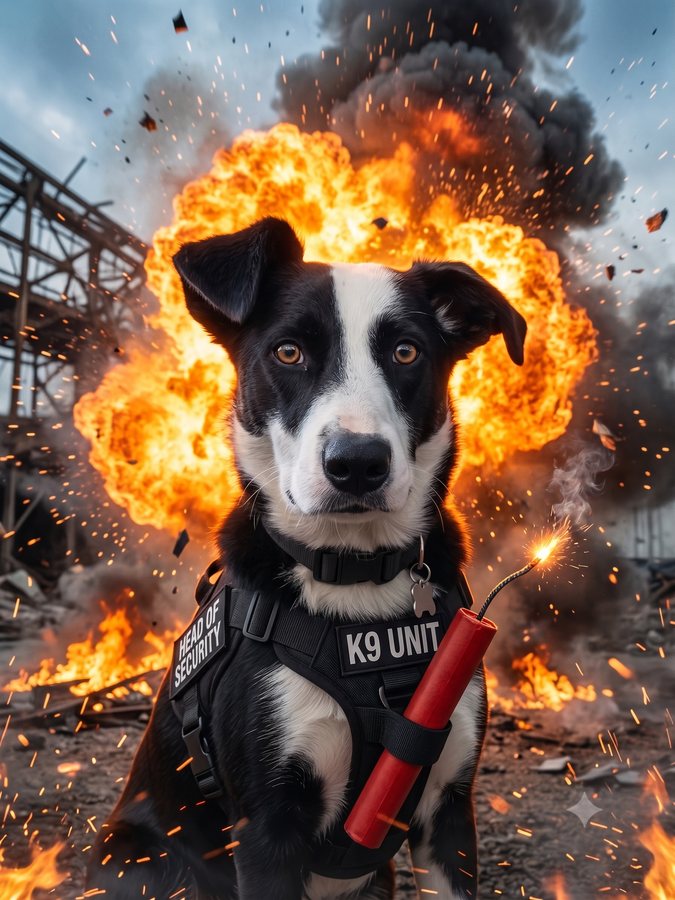
The tone here gets serious because the subject is. In person, less so. Two dogs, more music than is strictly productive, and a habit of reading too far into anything that catches my attention.
 Advisory